
Lost Knowledge of the Library of Alexandria: How Much Science Vanished in the Flames?
The Library of Alexandria, located in the ancient city of Alexandria, Egypt, has long been regarded as one of the most significant centers of knowledge in the ancient world. Founded in the early 3rd century BCE under the Ptolemies, the library aimed to collect all the world's knowledge and serve as a beacon of learning for scholars from various cultures. However, through a series of catastrophic events, much of this incredible repository of knowledge was lost to the flames.
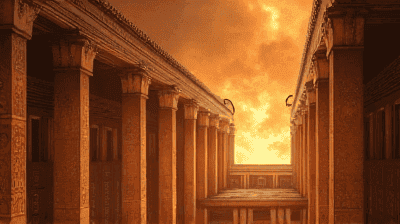
The Historical Context of Alexandria
The Rise of Alexandria
Founded by Alexander the Great in 331 BCE, Alexandria rapidly flourished as a multicultural hub in the Mediterranean world. Following Alexander's death, his general, Ptolemy I, established the city as the capital of the Ptolemaic Kingdom, initiating a period of intense intellectual and cultural development.
Cultural Melting Pot: Alexandria attracted scholars, philosophers, and scientists from various backgrounds, including Greek, Egyptian, Jewish, and Babylonian cultures. This diverse environment fostered rich intellectual exchange and collaboration.
Economic Prosperity: The city's strategic location along trade routes contributed to its wealth, enabling the Ptolemmies to invest in the arts, sciences, and education.
The Creation of the Library
The Library of Alexandria was established shortly after the city's founding, with the goal of amassing knowledge from around the world. Key figures in its creation include:
Ptolemy I Soter: The first ruler of the Ptolemaic dynasty, he played a crucial role in initiating the library project, envisioning it as a center for learning and scholarship.
Demetrius of Phaleron: A philosopher and statesman, Demetrius was appointed by Ptolemy I to oversee the library's creation and operations, setting the standard for its collection practices.
Collection of Texts: The library sought to collect works from all known civilizations, including texts in philosophy, mathematics, astronomy, medicine, and literature. Scholars would copy texts and translate works into Greek, enriching the library's holdings.
The Knowledge Preserved in the Library

The Scope of the Collection
At its peak, the Library of Alexandria is believed to have contained hundreds of thousands of scrolls and texts that encompassed a wide array of disciplines:
Philosophy: The library housed works by great philosophers, including Plato, Aristotle, and Epicurus, preserving ancient thought and contributing to the foundations of Western philosophy.
Mathematics: Texts by mathematicians such as Euclid, Archimedes, and Apollonius provided invaluable knowledge in geometry, physics, and mechanics. Euclid's 'Elements' alone laid the groundwork for modern mathematics.
Astronomy: Key astronomical texts, including those of Hipparchus and Eratosthenes, contributed to an understanding of celestial phenomena, planetary motions, and the size of the Earth.
Medicine: The library collected medical texts from various cultures, including works by Hippocrates, Galen, and other ancient physicians, forming a foundation for medical knowledge.
Literature: The library preserved numerous literary works, including epic poems, historical accounts, and plays, providing insight into the cultural and artistic achievements of the time.
The Role of Scholars
The Library of Alexandria attracted some of the greatest minds of the ancient world, who conducted research, engaged in debates, and made significant discoveries:
Eratosthenes: A mathematician and astronomer, he famously calculated the circumference of the Earth with remarkable accuracy using simple geometry.
Hipparchus: Known as the father of astronomy, he created one of the earliest star catalogs and developed trigonometry, revolutionizing the field.
Hero of Alexandria: An inventor and mathematician, he made early contributions to engineering and mechanics, including inventions like the steam engine.
Callimachus: A poet and scholar, Callimachus contributed to cataloging the library's vast collections and composed significant literary works, becoming a prominent figure in the literary landscape.
The Library's Influence on Science and Thought
The Hellenistic Legacy
The Library of Alexandria played a crucial role in the dissemination of knowledge across the Hellenistic world and beyond:
Synthesis of Ideas: The library served as a melting pot of ideas, synthesizing knowledge from diverse cultures. This blending of philosophies and sciences fostered innovation in thought and practice.
Preservation of Texts: The efforts to translate and copy works ensured the preservation of knowledge that might otherwise have been lost, influencing subsequent generations of scholars.
Impact on Renaissance Scholarship: The ideas and texts from the Library of Alexandria continued to influence scholars in the Middle Ages and the Renaissance, leading to a resurgence of interest in ancient knowledge. The revival of classical texts laid the groundwork for the Scientific Revolution.
Impact on Science and Technology
The intellectual endeavors at the Library of Alexandria had a lasting impact on various scientific fields:
Mathematics: The preservation of mathematical texts allowed future mathematicians to build on the knowledge of their predecessors. Euclid's work influenced geometry for centuries.
Astronomy: The astronomical cataloging and theories developed at the library laid the foundation for future astronomers, including Copernicus and Galileo, who would later challenge existing models of the universe.
Medicine: The medical knowledge preserved in the library contributed to the development of future medical practices and laid a foundation for the scientific study of health and illness.
The Destruction of the Library
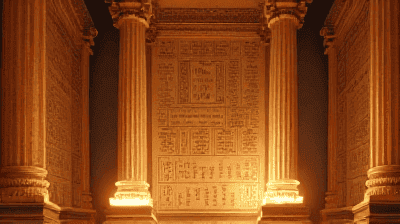
Multiple Accounts of Destruction
The exact circumstances of the destruction of the Library of Alexandria remain shrouded in mystery, with historical accounts often conflicting. Scholars suggest multiple events contributed to the library's decline:
Julius Caesar's Siege: In 48 BCE, during the Siege of Alexandria, Julius Caesar's forces reportedly set fire to the docks. The flames spread to parts of the city, causing the destruction of many texts and scrolls stored there.
Later Conflicts: Subsequent conflicts, including civil wars and invasions, likely led to further damage and loss of the library's holdings.
The Theophilus Incident: In 391 CE, a Christian archbishop named Theophilus allegedly ordered the destruction of pagan temples, which could have included the Serapeum, a temple that housed part of the library's collection.
The Arab Conquest: Although the story of the library's complete destruction during the Arab conquest in the 7th century is often exaggerated, it symbolizes the final loss of many ancient texts during a time of significant cultural transition.
The Impact of Loss
The destruction of the Library of Alexandria represents one of the most significant losses of knowledge in history. The implications of this loss are profound:
Cultural Amnesia: The loss of countless texts and library resources led to a gap in historical knowledge that took centuries to fill. Many works lost were never reproduced, leaving significant gaps in our understanding of ancient thought.
Scientific Stagnation: The decline of knowledge preserved in the library contributed to a period of scientific stagnation during the Middle Ages, often referred to as the Dark Ages, where intellectual progress slowed considerably in Europe.
Rediscovery and the Renaissance: While ancient texts were lost, some were preserved in the Islamic world, leading to their eventual rediscovery during the Renaissance. Scholars like Al-Khwarizmi and Ibn al-Haytham made significant contributions, preserving and building upon ancient knowledge.
The Quest for Lost Knowledge
Modern-Day Efforts
The idea of recovering lost knowledge from the Library of Alexandria has captured the imaginations of scholars and treasure hunters. Various initiatives aim to reconstruct what might have been lost:
Digital Humanities: With the rise of digital technology, scholars use tools like digitization and data mining to access ancient texts, even those that survived in fragmented forms.
Translation Projects: Efforts to translate and interpret ancient texts continue, allowing access to knowledge that may have parallels to works once housed in the library.
Cultural Preservation: Organizations and institutions recognize the importance of preserving knowledge across cultures and strive to collect and catalog significant historical texts that might otherwise be lost.
The Philosophical Reflection on Loss
The loss of the Library of Alexandria prompts profound philosophical questions about knowledge, memory, and the impermanence of human endeavors:
The Nature of Knowledge: The loss underscores the fragility of knowledge and the importance of recording and preserving ideas for future generations.
Cultural Heritage: Understanding the significance of diverse cultural contributions fosters appreciation for the interconnectedness of human thought and experience.
Legacy of Inquiry: The quest for knowledge, despite the obstacles encountered, remains a guiding principle in scientific and philosophical endeavors.
Conclusion
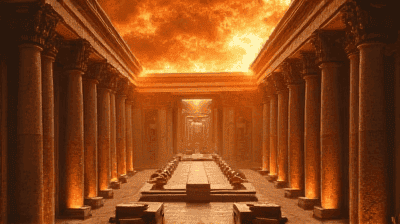
The Library of Alexandria stands as a symbol of humanity's aspiration for knowledge and understanding. Its destruction represents a profound loss that echoes through history, reminding us of the importance of preserving and disseminating knowledge across generations. While we may never fully grasp the extent of the knowledge that vanished in the flames, the legacy of the library continues to inspire modern scholars and thinkers.
As we navigate an increasingly complex world, the lessons from the Library of Alexandria encourage us to prioritize knowledge preservation and cultural exchange. By fostering collaboration and respecting diversity in inquiry, we can build on the foundations laid by ancient scholars, ensuring that the pursuit of knowledge remains a hallmark of human progress.
The story of the Library of Alexandria serves as a poignant reminder of our collective responsibility to safeguard the treasures of knowledge, ensuring that they endure for generations to come.
-
 History and Philosophy
The Forgotten Women of ENIAC: Programming Pioneers Written Out of Tech History
In the annals of computer history, the story often revolves around groundbreaking innovations, visionary engineers, and the machines that changed the world. However, a significant chapter remains largely untold: the critical contributions of women who played vital roles in the development of early computing systems, particularly the Electronic Numerical Integrator and Computer (ENIAC). Conceived in the 1940s, ENIAC was the first general-purpose electronic computer, and its programming was primarily carried out by a group of talented women who have largely been overlooked in the narrative of technological advancement.
-
 History and Philosophy
Alchemy to Chemistry: When Did Pseudoscience Become Real Science?
The transformation of alchemy into modern chemistry is one of the most fascinating stories in the history of science. Alchemy, often romanticized as the quest to turn base metals into gold and discover the elixir of life, is frequently dismissed as a pseudoscience. However, underlying its mystical and philosophical roots were principles that would pave the way for the rigorous discipline of chemistry.
-
 History and Philosophy
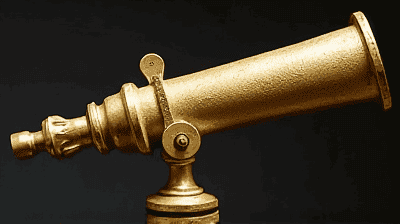
Galileo's Telescope: How One Instrument Sparked the Scientific Revolution
The dawn of the 17th century marked a pivotal moment in human history—the emergence of the Scientific Revolution. This transformative period reshaped humanity's understanding of the cosmos, laying the groundwork for modern science. Among the key figures of this revolution was Galileo Galilei, an Italian polymath whose use of the telescope fundamentally changed our perception of the universe. Through his groundbreaking observations, Galileo challenged long-standing astronomical theories, paving the way for a new empirical approach to science.
-
 History and Philosophy
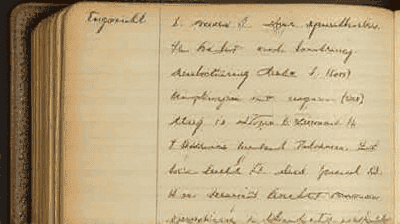
Marie Curie's Notebooks: Still Radioactive a Century Later – The Price of Discovery
Marie Curie is often celebrated as one of the most notable scientific pioneers of the 20th century. Best known for her groundbreaking research on radioactivity—a term she coined—Curie's work laid the foundation for advancements that would transform medicine, energy production, and our understanding of atomic science. However, her legacy is profoundly intertwined with the unforeseen consequences of her discoveries. Over a century after she conducted her research, her notebooks remain dangerously radioactive, serving as a sobering reminder of the cost of scientific discovery.
-
 History and Philosophy
The Rosetta Stone of Physics: How Newton's Principia Mathematica Decoded the Universe
When we think of pivotal moments in the history of science, few can rival the impact of Isaac Newton's 'Philosophiæ Naturalis Principia Mathematica,' commonly known as the Principia. Published in 1687, this groundbreaking work laid the foundations for classical mechanics and forever altered humanity's understanding of the natural world. Often likened to the Rosetta Stone for its role in deciphering the complexities of the universe, Newton's Principia provided a systematic framework for explaining the motion of celestial bodies and terrestrial objects.
-
 History and Philosophy
The Manhattan Project's Moral Dilemma: Science, War, and the Birth of the Atomic Age
The Manhattan Project remains one of the most significant and controversial scientific undertakings in history. This unprecedented effort during World War II led to the development of the atomic bomb, marking a profound shift in global power dynamics and ethical considerations surrounding science and technology. As scientists and military leaders raced to create a weapon capable of ending the war, they faced moral dilemmas that challenged their beliefs and the very nature of scientific pursuit.
Hot Posts
-

Best Practices for Disposing of Pet Waste: Keeping Your Home and Community Clean
-

Insurance Premiums Explained: Factors that Affect Your Coverage Cost
-

The Environmental Impact of Food Waste: Why Proper Disposal Matters
-

Top 10 Foods You Should Never Dispose of in Your Garbage Disposal
-

Types of Insurance: Exploring Coverage Options for Different Needs
-

Why Subscription Boxes Are the Future of Retail